

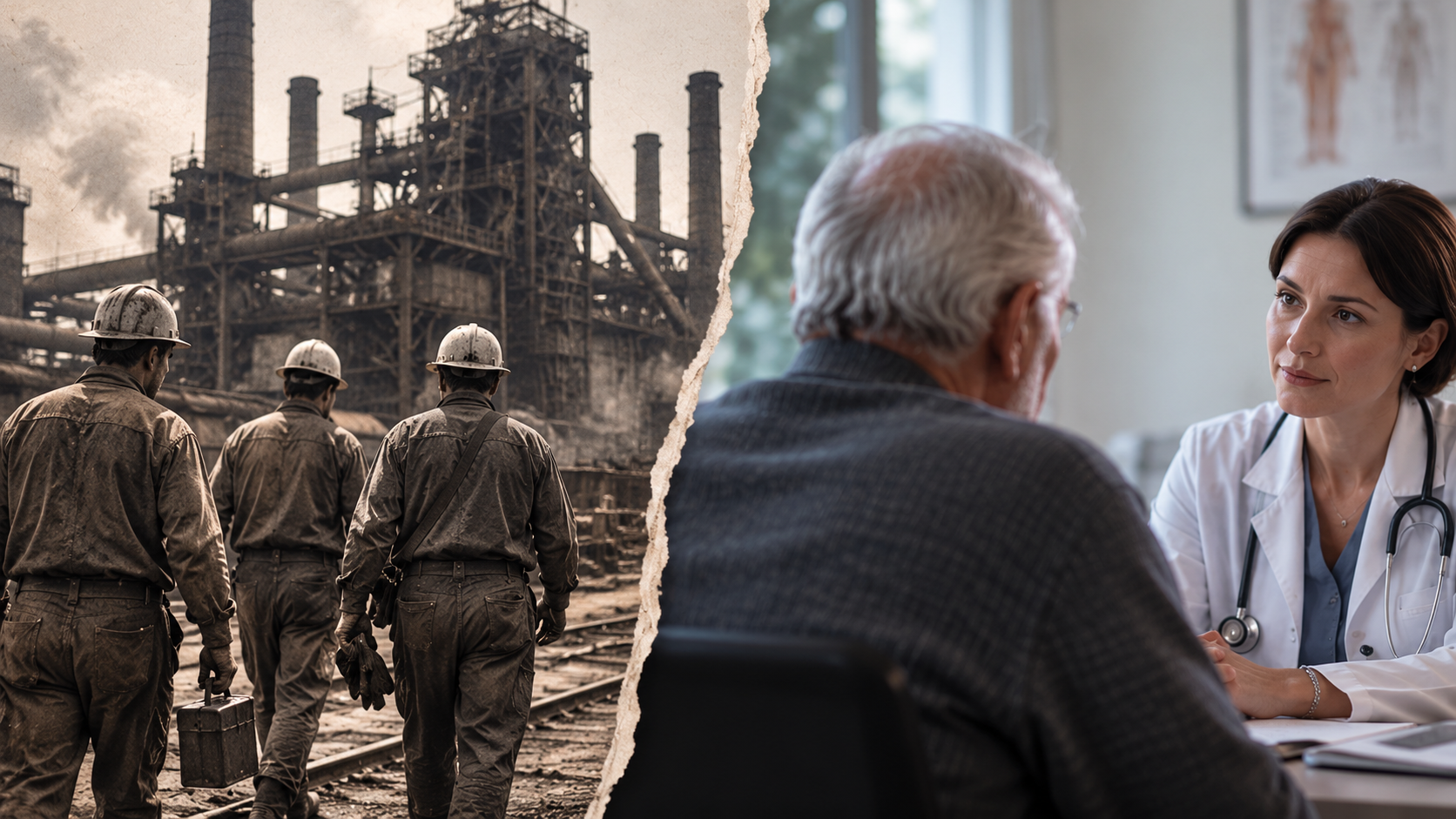
A mesothelioma diagnosis can raise a question that seems almost impossible to answer: if asbestos exposure happened decades ago, why is it causing problems now?
For some people in Pittsburgh and throughout Western Pennsylvania, the answer may lead back to jobs held years before the first symptoms appeared. Someone receiving a mesothelioma diagnosis today may have worked in a steel mill, power plant, factory, construction trade, boiler room, railroad facility, or another industrial setting in the 1960s, 1970s, or 1980s. At the time, they may not have known which materials contained asbestos or even realized they were working around it.
That history can still matter. Mesothelioma is strongly associated with asbestos exposure, and the disease has a long latency period, meaning decades can pass between exposure and diagnosis. A job that feels like a distant part of your past can therefore become important when doctors and attorneys begin looking for possible sources of exposure.
For Pittsburgh families facing mesothelioma today, understanding that connection can be an important first step toward making sense of what happened.
Why Can Mesothelioma Appear Decades After Asbestos Exposure?
When mesothelioma is related to asbestos exposure, it typically develops after a long latency period.
Asbestos fibers are extremely small. When asbestos-containing materials are disturbed, microscopic fibers can become airborne and may be inhaled. Because mesothelioma can take decades to develop after exposure, a diagnosis today can raise questions about work performed many years earlier.
You may have retired years ago. The workplace may have closed or changed ownership. Former coworkers may have moved away. Equipment and materials that were once part of an ordinary workday may no longer exist.
Even so, an exposure that happened many years ago can remain medically relevant after a mesothelioma diagnosis.
That is why understanding where someone worked, what they did there, and what materials or equipment were present can become so important later.
What Does Decades-Old Asbestos Exposure Look Like in Pittsburgh?
Western Pennsylvania's industrial history creates an important local context for these questions.
Generations of workers earned their living in steel production, manufacturing, construction, power generation, mechanical trades, maintenance, rail operations, and other industrial work. Historically, asbestos-containing materials were used in some industrial settings for insulation, fire resistance, and heat protection around machinery, steam systems, pipes, boilers, furnaces, valves, pumps, and other equipment.
That does not mean every person who worked in a Pittsburgh-area mill, plant, shop, or construction site was exposed to asbestos. Whether exposure occurred depends on the particular workplace, time period, materials, job duties, and surrounding work.
For someone diagnosed with mesothelioma, however, those details can help identify possible sources of exposure worth examining.
A maintenance worker may remember repairing old equipment. A pipefitter may remember insulated steam lines. An electrician may remember working while other trades removed insulation nearby. A mill worker may remember dusty shutdowns when equipment was opened, repaired, or replaced.
Those memories can provide useful clues even when the worker never heard anyone use the word “asbestos.”
What If You Never Knew You Were Working Around Asbestos?
Workers often remember the work itself better than the names of the materials around them.
You may remember:
- Insulation wrapped around pipes or steam lines
- Boilers, furnaces, pumps, valves, or other equipment being repaired
- Other trades removing or replacing insulation nearby
- Dust created during maintenance, shutdowns, renovations, or repairs
- Old materials being cut, scraped, removed, or replaced
- Areas of the facility where particular types of work regularly occurred
Those details do not establish by themselves that asbestos exposure occurred. They can, however, help identify what should be investigated further.
That distinction matters. A mesothelioma case should be built on evidence, not assumptions about a job title or workplace.
Why Is Legacy Asbestos Still Relevant in 2026?
It is easy to hear about modern asbestos restrictions and assume asbestos is simply a problem of the past.
The reality is more complicated.
The Environmental Protection Agency uses the term legacy uses for older uses of asbestos where manufacturing, processing, or distribution has ended, even though asbestos-containing materials may still remain in buildings, equipment, and other settings.
EPA's 2024 Part 2 asbestos risk evaluation examined these legacy uses and associated disposals. In June 2026, the agency also sought additional information about activities that can disturb asbestos-containing materials, including older construction products that may still contain asbestos.
That continued attention reflects an important reality: materials installed or placed into use years ago may still be present today.
For someone already diagnosed with mesothelioma, however, the central question is usually not whether exposure could happen now. It is understanding when and where past exposure may have occurred.
A modern diagnosis can therefore require looking backward rather than forward.
What If the Plant Closed or the Exposure Happened 40 Years Ago?
An old exposure history can feel impossible to reconstruct, particularly when a workplace no longer operates, or you cannot remember exact dates and product names.
But your memory is not necessarily the only source of information.
At Savinis, Kane & Gallucci, LLC, we know that reconstructing an exposure history often requires more than memory alone. Our attorneys may examine employment and union records, jobsite histories, former coworkers, contractors, and product information to help identify potential sources of exposure.
The fact that the possible exposure occurred decades ago also does not, by itself, answer whether a claim can still be filed. Pennsylvania filing deadlines involve separate legal questions that depend on the circumstances of the individual case.
In other words, a workplace from decades ago can still be important to understanding how an exposure may have occurred.
What Should You Try to Remember After a Mesothelioma Diagnosis?
You do not need to reconstruct an entire career on your own.
A useful place to begin is simply writing down what you remember while those details are available to you.
Think about your employers, worksites, approximate years, job titles, departments, regular duties, major maintenance projects, equipment you worked around, union or trade membership, and coworkers who might remember the same conditions.
If you worked at several Pittsburgh-area facilities or changed trades during your career, include those jobs too. Exposure questions are not always limited to the workplace you remember most clearly.
You also do not need to know the name of every product you encountered before speaking with an attorney. Families may remember the workplace, department, job duties, or equipment involved without knowing which specific products contained asbestos.
The goal is not to solve the exposure history yourself. It is to preserve the information that can help an investigation begin.
A Diagnosis Today Can Lead Back to Work Performed Decades Ago
When mesothelioma is diagnosed years after retirement, it is understandable to wonder whether something that happened 30 or 40 years ago could still be relevant.
It can.
The long latency associated with mesothelioma is precisely why old jobs, former worksites, equipment, materials, and coworkers can become important after a diagnosis. In Pittsburgh and throughout Western Pennsylvania, that investigation often intersects with a long history of industrial and building-trade work.
You may not remember every product you encountered, and you should not be expected to determine on your own which materials contained asbestos or which companies may bear legal responsibility.
If you or a loved one has been diagnosed with mesothelioma after working in Pittsburgh or elsewhere in Western Pennsylvania, contact Savinis, Kane & Gallucci, LLC to schedule a free consultation. We can discuss what you remember about your work history, explain how potential exposure can be investigated, and help you understand the legal options and next steps that may be available based on your circumstances.
Disclaimer: The articles on this blog are for informational purposes only and are no substitute for legal advice or an attorney-client relationship. If you are seeking legal advice, please contact our law firm directly.